Показаны сообщения с ярлыком 街道. Показать все сообщения

понедельник, 26 ноября 2012 г.

The Bestuzhev Courses were the largest and most prominent women's higher education institution in Imperial Russia.

The Bestuzhev Courses were the largest and most prominent women's higher education institution in Imperial Russia. 
The Courses opened its doors in 1878. It was named after Konstantin Bestuzhev-Ryumin, the first Director. The most famouse professors of the Bestuzhev Courses were Alexander Borodin, Faddei Zielinski, Dmitry Mendeleyev, Ivan Sechenov, and Sergey Platonov. A building for Bestuzhev Courses on the 10th Liniya (Line) of Vasilevsky Ostrov (Island) was built in 1885 on a draft of Academician of Architecture A. Krasovsky. 
Bestuzhev courses in St. Petersburg. 1878-1918
Konstantin Bestuzhev-Rumin (1829 - 1897)
Initiators of foundation of High Women's (Bestuzhev's) Courses. (1890).
Professor of Physics and Mathematics Faculty of the Courses Ivan Meshchersky among girl students (1914).
Female students of the courses were called "Bestujevka". 
Female students of the courses.
The girl students in the physics laboratory (1913).
The Library of the Bestuzhev Courses now (2012).
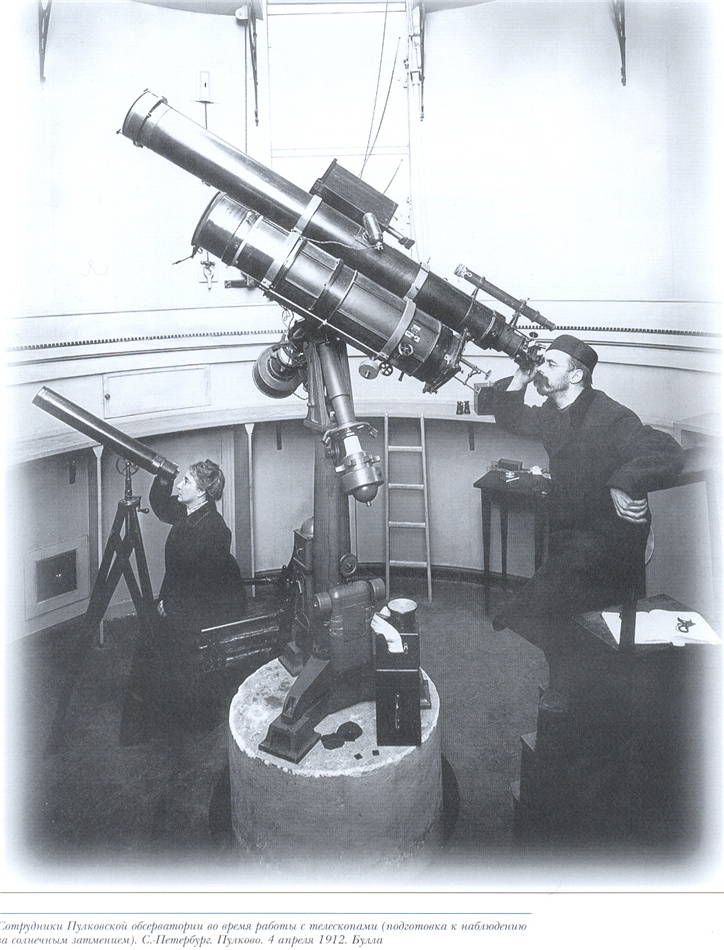
The new observatory of the Bestuzhev Courses (1912).
The Bestuzhev Courses were on the 10th Line of Vasilevsky Ostrov (Island) and some girl students rented room on 8th Line and then in the very nice building on 14th Line.
Bestuzhev Courses building now. (2012).

The Annenkov house in the center of Moscow.

This building was built in 1776 for the Governor-General of Siberia Prince Jacobi. 
Decembrist Ivan Annenkov spent his childhood and adolescence in this house. This building became very profitable in 19th century because of the hotels, restaurants, and cafes placed in it.
These places was liked to visit by the famous Moscow writers, poets, musicians and artists in the late 19th century and early 20th century.


Here was the famous cafe Tramble (Tremble) which liked to visit Ivan Alekseevich Bunin the outstanding Russian writer and Nobel Prize winner for literature in 1933, revolutionary poet Vladimir Mayakovsky and many other poets, musicians and artists. 

Famous Tramble cafe (1901). 

The history of relations between Ivan Annenkov and French ballerine P. Gebl formed the basis of the famous novel of the great French writer Alexander. Dumas 'Fencing Master'.


Vadim Shershenevich
Shershenevich was a secret owner of "Snuff-boxes," because the cafe was the realy owned by K. Korotkov. 

Vladimir Mayakovsky 

Jeanne Mammen In the Café. 1920-е гг.

Vadim Shershenevich wrote: "Some people in the cafe under the counter sold brilliants and cocaine. They then walked home through the dark streets and gave the money to gangsters. Bandits did not touch the poets. Owners were paid accurately speaking for twenty kerenkoy and a glass of coffee and cake." 
"Young people are with signs of the shoulder straps on the coats, which transmit to each other the news of Kornilov. One of them is bald, covered in a coat, quietly boasting of what he adjutant of the Grand Duke. pouring the tea vodka from a bottle brought, he chuckles and poshuchivaet with neighbors: - Shooting will begin soon. or they me or I them. in the meantime, listen to poetry. " 

Ivan Aleksejevich Bunin (1901).

In the "Accursed Days" Bunin wrote indignantly: 

A new literary infamy, below which the fall seems to have nowhere to go: to open a tavern in the most heinous kind of "musical snuff box" - sit speculators, tricksters, public girls and eats cakes for a hundred rubles a piece, drink a hypocrite of the kettles, and poets and novelists (Alexei Tolstoy, Bruce, and so on) are reading their own and others' work, choosing the most obscene. Bruce is said to read "Gavriliadu", saying all that is replaced by dots, completely. Alyosha had dared to propose to read and me - a big fee, says give. 


1920-1930

The cafe "Musical snuff box" was opened after the revolution in the premises of the former bakery. Well known poets Mayakovsky, Esenin, Shershenevich, Burliuk and Vertinsky have read their poems there. 

воскресенье, 25 ноября 2012 г.

This is a brief description of the beautiful historic building of the Twelve Collegia ( The building of St. Petersburg Imperial University and St. Petersburg State University now).

This is a brief description of the beautiful historic building
of the Twelve Collegia ( The building of St. Petersburg Imperial University and St. Petersburg State University now).
The Saint Petersburg Imperial University Seal
The Saint Petersburg Imperial University 
was Established in 1724.
The historic building of the Twelve Collegia (The Saint Petersburg State University now).
This is the corridor is the Twelve Collegia.
It evoked the continued admiration of all visitors of the past and present century. Thus, the guest of St. - Petersburg State University, wrote in the journal "Contemporary" (1838, Vol X): "The most remarkable is the University Gallery. Its large picture windows, shining parquet, purity and taste of the furniture, the infinite length of it are something unique in its kind. There's never been in any public institution in Europe such ornaments of the temple of Science. "
In the central part of the building were built the main entrance and stairway, the church was consecrated June 29, 1837 in the name of the Apostles Peter and Paul, two tiers of windows solemn assemblies Hall (now the Assembly Hall), with choirs and columns made ​​of artificial marble.
The Hall of the University has witnessed many, including political, events. Anti-government rallies crowded student orientation is held, inter alia, in September-October 1861, in February 1881, in February 1899, in March 1901 and February 1903, February and October 1905, November 1910, February 1917, for example, March 18, 1903, from 12 to 2 o'clock in this room held violent student assembly. Rector of the University Professor of Civil Law and Procedure A.H.Golsisten wrote in a memo: "The participants are not allowed to speak to Mr or the Trustee, neither I nor Mr. Inspector. Classes at the University suspended. Perpetrators will be brought to a professional disciplinary tribunal." February 7, 1905 there was a mass gathering of students, which was torn to pieces and the center of the room hung a portrait of Tsar Nicholas II and damaged a portrait of Alexander III. Head of the St. Petersburg Police Department on this issue reported that the public sees it as undermining the credibility of the government, attempting to "the laws of the consecrated form of government."
The Twelve Collegia building on Vasilievsky Island in Saint Petersburg is the university's main building now.
Panorama of University Building from Neva River (1861).
The Twelve Collegia building (University Building) as it appears on a 1753 engraving. 

Peter the Great planned to build a New Venice on Vasiljevsky Island. There were built a lot of channels, which were later buried (in the middle of XVIII century). 
This is the view of the Hermitage Building from the Vasilevsky Island.

суббота, 24 ноября 2012 г.

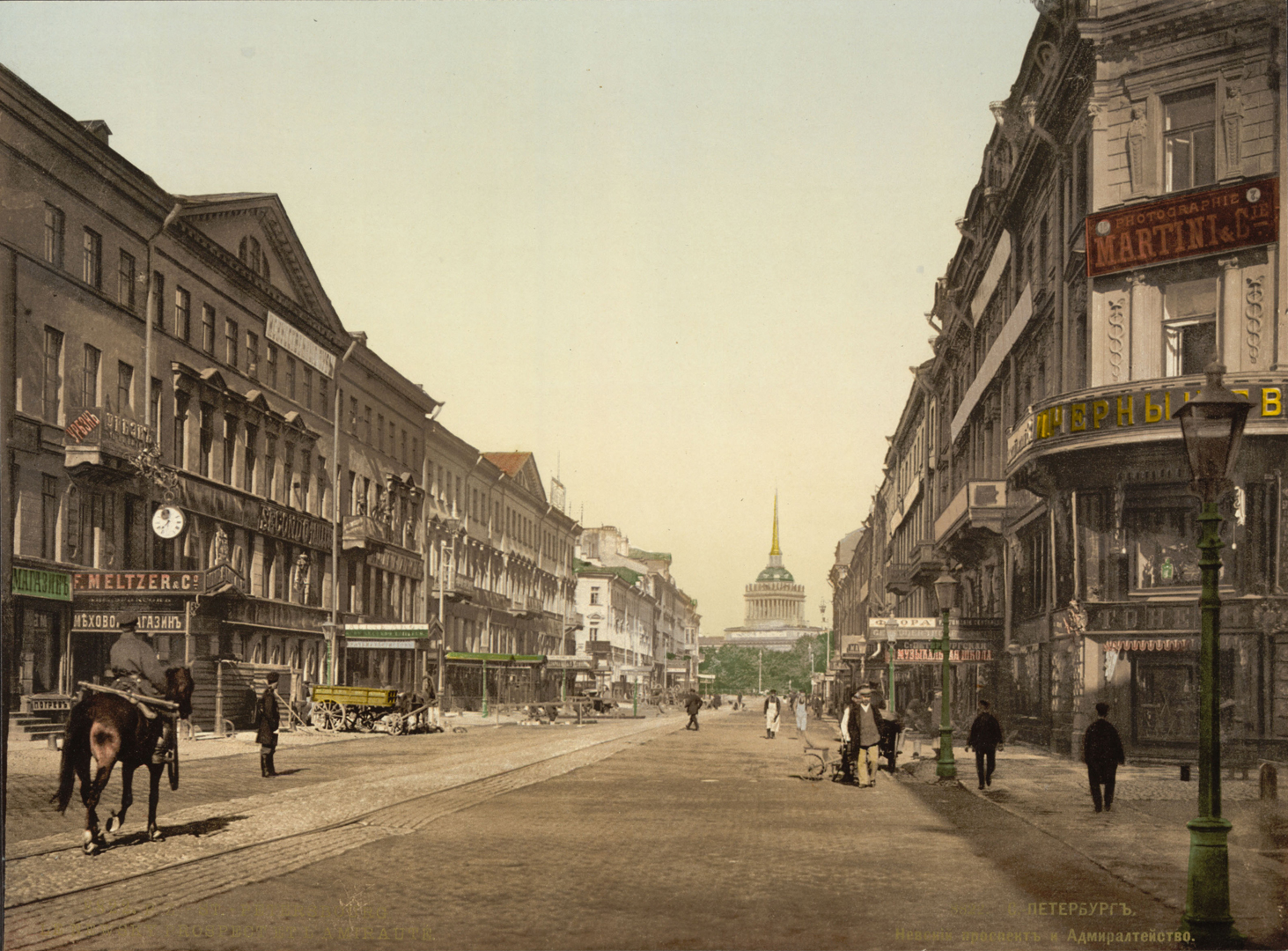
The history of Nevsky Prospect in St. Petersburg. Russia.


Nevsky Avenue (Prospect) is the main street in the city of St. Petersburg, Russia. Planned by Peter the Great as beginning of the road to Novgorod and Moscow, the avenue runs from the Admiralty to the Moscow Railway Station and, after making a turn at Vosstaniya Square, to the Alexander Nevsky Lavra.
The chief sights include the Stroganov Palace, the huge neoclassical Kazan Cathedral, 
This is theSketchUp 3D model of the Kazan Cathedral.

the Art Nouveau Bookhouse (Dom Knigi), Elisseeff Emporium, half a dozen of 18th-century churches, a monument to Catherine the Great, the Anichkov Bridge with its horse statues and much more. The feverish life of the avenue was described by Nikolai Gogol in his story "Nevsky Prospekt". Fyodor Dostoevsky often employed the Nevksy Prospekt as a setting within his works, such as "Crime and Punishment" and "The Double: A Petersburg Poem".

The view of the Nevsky Prospeсt from the Admiralty (1753).

This is the plan of St. Petersburg by I. Homann. ( 1720). 

View of Palace Square from Nevsky Prospeсt (1804).

Nevsky Prospect. Early 19th century.

Nevsky Grand Gostiniy Dvor (1910).

The Nevsky Prospect (1900).

Monument to Alexander III on Znamenskaya Square. (1910).

The Nevsky Prospeсt (1912).

The Nevsky Prospeсt f (1900).

The Nevsky Prospeсt near the Nicholas Railway Station (1890).


The Nevsky Prospect in 1901. 

The Winter Palace in St. Petersburg, Russia was the official residence of Russian monarchs from 1732 to 1917.

The Winter Palace in St. Petersburg, Russia was the official residence of Russian monarchs from 1732 to 1917. It is Situated between the Palace Embankment and the Palace Square. 
You can look at SketchUp model of The Winter Palace in GoogleEarth System.
The palace was constructed on a monumental scale that was intended to reflect the might and power of Imperial Russia. From the palace, the Tsar ruled over 22,400,000 square kilometres (8,600,000 sq mi) (almost 1/6 of the Earth's landmass) and over 125 million subjects by the end of the 19th century. It was designed by many architects, most notably Bartolomeo Rastrelli, in what came to be known as the Elizabethan Baroque style. 
The green-and-white palace has the shape of an elongated rectangle, and its principal façade is 250 m long and 100 ft (30 m) high. The Winter Palace has been calculated to contain 1,786 doors, 1,945 windows, 1,500 rooms and 117 staircases. 
The rebuilding of 1837 left the exterior unchanged, but large parts of the interior were redesigned in a variety of tastes and styles, leading the palace to be described as a "19th-century palace inspired by a model in Rococo style."
The Winter Palace in St. Petersburg under Peter I.
In 1711. 
This is the view of the Winter Palace from the Neva River. (1853). 
The view of the Palace Square and Winter Palace in St. Petersburg (1847).
The view of the Palace Square and Winter Palace in St. Petersburg (1847). 

Vasily Sadovnikov

The view of the Winter Palace from the Admiralty (1814) 
H. M. Emperor Alexander III reviewing the Horse Guards in Winter Palace Place, in St. Petersburg. At the head of the regiment is H. I.H. Grand Duke Paul of Russia, commander of the Horse Guards. Reproduced from an oil painting by Mazurowski belonging to the picture gallery of the Emperor Alexander III Museum, St. Petersburg.
SPB Palace square and Alexander's column 1890-1900
In 1905, the Bloody Sunday massacre occurred when demonstrators marched toward the Winter Palace, but by this time the Imperial Family had chosen to live in the more secure and secluded Alexander Palace at Tsarskoe Selo, and returned to the Winter Palace only for the most formal and rarest state occasions. Following the February Revolution of 1917, the palace was for a short time the seat of the Russian Provisional Government, led by Alexander Kerensky. Later that same year, the palace was stormed by a detachment of Red Army soldiers and sailors—a defining moment in the birth of the Soviet state. On a less glorious note, the month-long looting of the palace's wine cellars during this troubled period led to what has been described as "the greatest hangover in history". Today, the restored palace forms part of the complex of buildings housing the Hermitage Museum. 
The coach of the imperial family at the entrance of the Winter Palace (1914). 
The declaration of war on 20 July 1914.